
You wake up on a crisp October morning in Princeton, see the frost on the lawn, and head to the kitchen to start your coffee. You turn the faucet handle, but instead of the usual strong stream, you get a weak trickle... or maybe nothing at all. It’s a moment that can cause instant panic. As a plumber with 14 years of experience in this area, I’ve seen this exact scenario play out countless times. Those first surprise overnight freezes can catch homeowners off guard, especially in a place with so many beautiful, historic properties.
Knowing how to tell if pipes are freezing overnight is crucial to preventing a small problem from becoming a catastrophic one. A frozen pipe isn't just an inconvenience; the pressure from expanding ice can cause a pipe to burst, leading to significant water damage. Before that happens, your home’s plumbing will often give you subtle clues. Here are the key frozen pipes warning signs Princeton homeowners should be watching for as the temperatures drop.
Common Signs and Symptoms
Catching a freezing pipe early is the best way to prevent a disaster. My team and I always tell clients to be vigilant when the first cold snaps hit. Pay close attention to your plumbing and look for these tell-tale signs:
- Reduced Water Flow or No Water at All: This is the most common and obvious sign. If you turn on a faucet and only a trickle comes out, especially on a frigid morning, a freeze is likely the culprit. If it's affecting only one faucet, the freeze is probably in the pipe leading directly to it. If it’s your whole house, the problem could be closer to where the main water line enters your home.
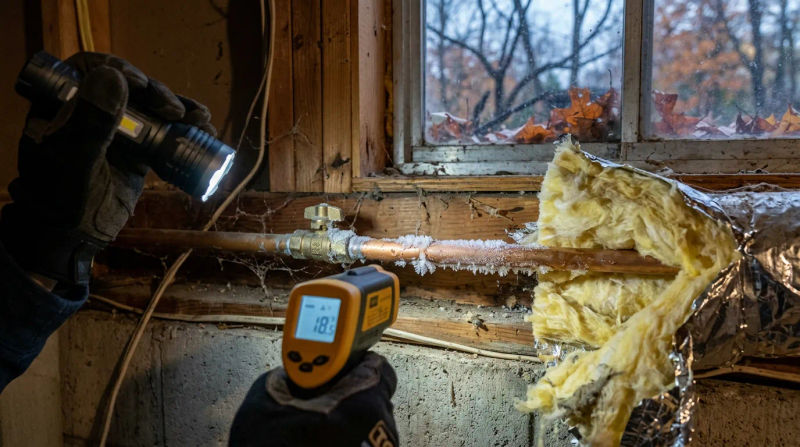
- Visible Frost on Exposed Pipes: Take a flashlight and inspect pipes in unheated areas like your basement, crawlspace, attic, or garage. If you see a layer of frost or ice on the outside of a pipe, it's a clear indication that the water inside is frozen or dangerously close to it.
- Strange Smells Coming from Drains or Faucets: When a pipe freezes, the ice can create a blockage that traps sewer gases and other odors that would normally flow away. If you notice an unusual or unpleasant smell coming from a drain, it could be a secondary symptom of a frozen line.
- Bulging or Deformed Pipes: This is a serious red flag. As water freezes, it expands with incredible force. This pressure can cause the pipe itself to bulge or look slightly swollen. If you see this, the pipe is under extreme stress and is at high risk of bursting. Do not attempt to thaw it yourself; shut off your main water supply and call a professional immediately.
- Odd Gurgling or Banging Sounds: When you try to run water, you might hear strange gurgling, clanking, or banging sounds coming from within your walls. This can be the sound of water trying to move through a partially frozen, constricted pipe. It's one of the early frozen pipes signs that shouldn't be ignored.
- Condensation or Damp Drywall: Sometimes, a pipe freezing within a wall can cause subtle changes on the wall's surface. You might notice condensation, a damp spot, or even a slight discoloration. This happens because the pipe's cold temperature is transferring through the wall materials.
- A Sudden Drop in Water Pressure in Cold Weather: This is a critical indicator. If you're wondering what to do when water pressure drops in cold weather, the first step is to consider a freeze. The blockage created by the ice acts like a clog, restricting the flow and causing a noticeable drop in pressure throughout your home.
What Causes This Problem
Understanding why pipes freeze can help you prevent it. The primary cause is simple: water inside the pipes is exposed to temperatures at or below 32°F (0°C) for a sustained period. However, certain homes and situations are far more vulnerable.
Here in Princeton, we have a wealth of gorgeous pre-1940s homes - Victorians, Tudors, and Colonials. While architecturally stunning, these properties often have plumbing in places that weren't designed with modern insulation standards in mind. In my experience, the most common problem areas are:
- Pipes in Exterior Walls: Older homes may have minimal or settled insulation in the walls, leaving water lines with little protection from the cold.
- Unheated Basements and Crawlspaces: The historic stone or brick foundations common in this area can get extremely cold. Pipes running along these foundation walls or through drafty crawlspaces are prime candidates for freezing.
- Attics and Garages: Any plumbing routed through unheated or poorly insulated attics and garages is at high risk.
- Outdoor Spigots and Hoses: Forgetting to disconnect your garden hose is a classic mistake. Water trapped in the hose and spigot freezes, and that ice can travel back into the pipes inside your home.
Even temperature swings in October can be deceptive. A warm afternoon followed by a sudden overnight plunge into the 20s doesn't give your home's structure time to retain warmth, making pipes more susceptible. Additionally, heavy leaf fall can clog gutters, causing water to pool near your foundation. This saturates the ground, and if a cold snap hits, it can freeze the soil around the water line entering your home, creating a problem before it even gets inside.
When to Call a Professional
As a hands-on plumber, I appreciate a homeowner's desire to tackle problems themselves. However, dealing with frozen pipes can be risky.
You might be able to handle it if:
- You can see the frozen pipe (e.g., under a sink or in an accessible part of the basement).
- There is only a light layer of frost, and water is still trickling out.
- The pipe shows no signs of bulging, cracking, or leaking.
In this specific case, you can try to gently thaw the pipe. Open the faucet to allow water to flow as it thaws. Use a hairdryer on a low setting, a heating pad, or towels soaked in hot water. Never, ever use a blowtorch, propane heater, or any open flame. The risk of fire is immense, and the intense heat can cause the pipe to burst.
It's time to call a qualified professional immediately if:
- You don't know where the frozen pipe is located.
- The pipe is behind a wall or in an inaccessible area.
- You have no water at all in your home.
- You see any bulging, cracking, or leaking from the pipe.
If a pipe has already burst, your first two steps are critical: shut off the main water valve to your house and then call for emergency service. An experienced professional has specialized equipment to safely thaw pipes, even those hidden in walls, and can perform any necessary repairs to prevent water damage.
Conclusion
As we head into the colder months, paying attention to your home's plumbing is one of the most important things you can do. A small change like a drop in water pressure or a gurgling sound can be an early warning of a much bigger problem. This is especially true for those of us living in Princeton's beautiful but older homes, which have their own unique vulnerabilities to the cold.
Don't wait for a trickle to become a flood. Be proactive, check your exposed pipes during the first few cold nights, and don't hesitate to get an expert opinion. Acting early can save you from the stress, mess, and expense of a burst pipe.
If you notice any of these signs, contact a local plumber for an inspection.