

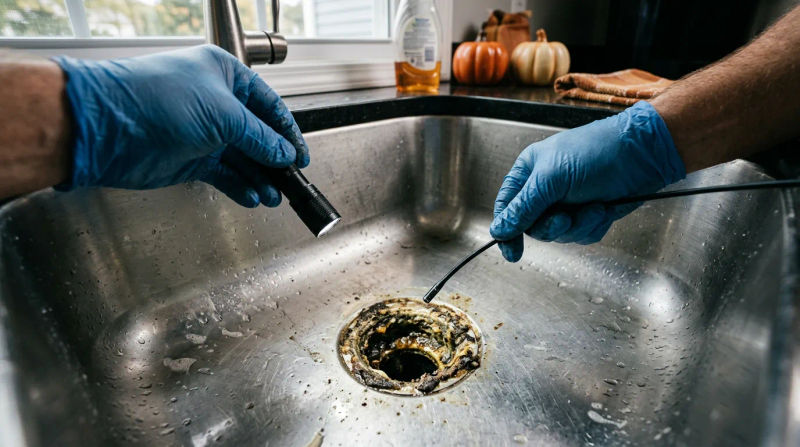
It’s a classic October scene in Toms River. The air is crisp, you’ve just finished a hearty family dinner - maybe a roast or a rich stew - and you head to the kitchen to clean up. You turn on the faucet, and instead of draining away, the water starts to rise, bringing with it unpleasant-smelling gunk. You run the garbage disposal, but it just churns the murky water. A stubbornly clogged kitchen sink is one of the most common and frustrating household plumbing problems I see, and it always seems to happen at the worst possible time.
As a plumber with over a decade of experience, I can tell you that if your kitchen sink keeps clogging, it's rarely a one-off issue. It’s usually a symptom of a larger problem building up inside your drain lines. Understanding what’s causing the blockage is the first step to fixing it for good.
Common Signs and Symptoms
A complete blockage is obvious, but most serious clogs start with subtle warning signs. Paying attention to these can help you address the issue before it becomes a full-blown emergency. Here’s what my team and I tell homeowners to watch for:
- Slow Draining: This is the most common first sign. If your sink takes several minutes to empty when it used to take seconds, there's likely a partial blockage forming downstream.
- Gurgling Sounds: Do you hear strange gurgling or bubbling noises from the drain as the water goes down? This is often caused by trapped air being forced through a partial clog in the pipe.
- Water Backs Up from the Dishwasher: A very specific and important sign is when the kitchen sink backs up after dishwasher runs. Your dishwasher drain line connects to your kitchen sink's plumbing. If the main drain line is obstructed, the water forcefully pumped out by the dishwasher has nowhere to go but up into your sink basin.
- Foul Odors: A persistent, unpleasant smell coming from your drain, even when it’s not in use, is a clear indicator that food particles and grease are trapped and decaying inside the pipes.
- The Plunger Only Works Temporarily: If you find yourself reaching for the plunger every few weeks to solve your kitchen sink clogging issue, it means you’re only dislodging a small part of a much larger, deeper blockage.
What Causes This Problem
So, what’s actually happening inside those pipes? A recurring clog is rarely caused by a single event. It’s the result of months or even years of buildup. Here are the most common culprits I encounter, especially in an area like Toms River with its mix of home styles and ages.
1. Grease, Oils, and Fats (FOG) This is, without a doubt, the number one cause of kitchen drain clogs. When you pour hot, liquid grease from a frying pan down the drain, it may seem harmless. But once it enters the cooler pipes, it solidifies and sticks to the pipe walls. Over time, other debris - food particles, soap scum - gets caught in this sticky trap, narrowing the pipe until it’s completely blocked. This is why a simple plunging won't work; you aren't removing the hardened grease lining the pipe. This is the exact scenario that calls for professional grease buildup drain cleaning Toms River residents often need.
2. The Wrong Kind of Food Debris Even with a high-powered garbage disposal, certain foods should never go down the drain. These include:
- Coffee Grounds: They don’t dissolve in water and clump together, creating a dense, sludge-like obstruction.
- Starchy Foods: Things like pasta, rice, and potato peels expand when they absorb water, turning into a thick, pasty mass inside your pipes.
- Fibrous Vegetables: Celery, corn husks, and onion skins have stringy fibers that can wrap around the garbage disposal blades and form tough, stringy clogs.
3. Your Home's Age and Pipe Material Toms River is characterized by a wonderful variety of homes, including many charming single-story Ranch homes and Split-levels from the post-war suburban expansion of the 1950s. While these homes have great character, they often have original cast iron drain lines. After 60+ years, the interior of these pipes becomes rough, pitted, and corroded. This rough texture is like Velcro for grease and debris, making these older homes particularly susceptible to repeat clogs. Newer homes with smooth PVC pipes are less prone to this specific issue, but they aren't immune to grease buildup.
4. Issues with the Drain Line Itself Sometimes the problem is with the plumbing's design. If a drain line was installed with an improper slope (or “pitch”), it won’t use gravity effectively to carry waste away. This creates low spots where water and debris can pool and form a blockage. The varied construction across Toms River's subdivisions means we see all kinds of unique plumbing layouts, and a poorly configured drain is a common source of chronic problems.
5. Heavy Leaf Fall and Main Line Issues In October, we also have to consider outside factors. Heavy leaf fall can get washed into the municipal sewer system, sometimes contributing to larger blockages downstream. While less common, a blockage in your home's main sewer line can cause backups in the lowest drains first, which can sometimes be the kitchen sink.
When to Call a Professional
For a minor, one-time clog, a little DIY effort can sometimes do the trick. A plunger or a simple mix of hot water, baking soda, and vinegar can sometimes clear a small obstruction. However, I strongly advise against using harsh liquid chemical drain cleaners. They are highly corrosive and can damage your pipes - especially older cast iron ones - and often fail to solve the underlying problem of grease buildup.
The time to call for help is when the problem becomes a pattern. If your Toms River kitchen drain keeps clogging, it’s a clear signal that DIY methods are no longer sufficient. You’re not dealing with a simple clog; you’re fighting a systemic buildup deep in the line.
An experienced professional won't just temporarily clear the way. We use specialized tools to diagnose and solve the root cause. This typically involves:
- Professional Drain Augering (Snaking): We use a motorized auger with different cutting heads that can be sent far down the drain line to physically break up and pull out the tough blockage of grease, food, and sludge.
- Hydro Jetting: For severe cases of grease buildup, hydro jetting is the most effective solution. This process uses high-pressure water jets to scour the inside of the pipes, completely removing all the accumulated grease and restoring the pipe to its original diameter. It's the definitive answer to chronic clogging.
Conclusion
That recurring kitchen sink clog is more than just an annoyance; it's your plumbing system's way of telling you there's a deeper issue that needs attention. While it’s tempting to try a quick fix, chronic blockages are almost always caused by hardened grease buildup, debris clinging to old pipes, or even issues with the drain line's installation.
Ignoring the warning signs like slow draining or gurgling will only lead to a complete and often messy backup later on. Acting early not only saves you from a future headache but also helps protect the long-term health of your home's plumbing.
If you notice any of these signs, contact a local plumbing professional for an inspection. They can properly diagnose the cause and provide a lasting solution.