

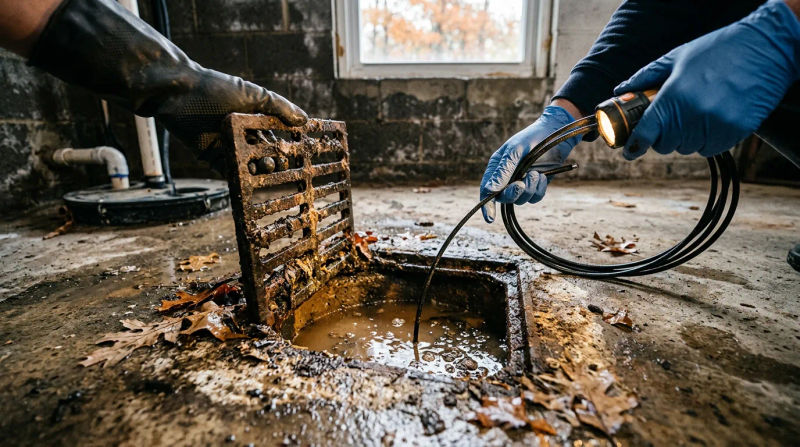
It’s a scenario I’ve seen play out dozens of times. You head down to the basement to switch a load of laundry, and you’re hit with a musty, unpleasant smell. Then you see it: a puddle of murky water creeping out from the floor drain in the middle of the room. It’s a frustrating and alarming discovery, and one that many homeowners face, especially here in Sicklerville during the fall. As the October rains saturate the ground and leaves clog up storm drains, your home's plumbing system is put under extra stress, and the basement floor drain is often the first place to show signs of trouble.
Over my 14 years as a drain specialist, I’ve learned that a floor drain backup is more than just a minor inconvenience; it’s your home’s early warning system. It’s telling you that something is wrong deeper within your plumbing lines. Understanding what these signs mean is the first step toward fixing the problem before it becomes a major, messy emergency.
Common Signs and Symptoms
A basement floor drain backing up is rarely a sudden event. It usually starts with subtle clues that are easy to miss if you don't know what to look for. If you notice any of these signs, your plumbing is trying to get your attention.
- Standing Water: The most obvious sign is water pooling around the drain that doesn't recede. This could be clear water, or worse, dirty water with debris.
- Foul Odors: A persistent sewer gas smell coming from your basement is a classic red flag. The P-trap in the drain is designed to hold water to block these gases, but if the trap is dry or if pressure is building in the line, those odors will escape into your home.
- A Floor Drain Gurgling Sound: Do you hear gurgling or bubbling from the floor drain when you flush a toilet or drain a bathtub upstairs? This is a tell-tale sign of a ventilation issue or a partial clog in the main sewer line. Air is being displaced by the flow of water and is escaping through the lowest point - your floor drain.
- Slow Draining Fixtures: If your basement toilet, shower, or utility sink is draining slower than usual, it often points to a developing clog in the main line that they all share.
- Sewage in the Drain: The most serious symptom is seeing raw sewage or toilet paper remnants coming up through the floor drain. This is a clear indicator of a significant main sewer line blockage and is a sanitary hazard that needs immediate attention.
- Bubbles in the Toilet: When you run water in a nearby sink, do you see bubbles coming up in the toilet bowl? This, like the gurgling, points to trapped air in the drain lines struggling to escape.
- Problems Worsen with Rain: If your floor drain backup issues seem to appear or get worse after a heavy rainstorm, it could mean that stormwater is infiltrating your sewer line through cracks, compounding the pressure from an existing clog.
What Causes This Problem
Understanding the cause is key to finding the right solution. A basement floor drain backing up in Sicklerville is typically a symptom of a larger issue, not the problem itself. Here are the most common culprits my team and I encounter.
First and foremost is a clog in the main sewer line. This is the single large pipe that carries all the wastewater from your home out to the municipal sewer system. Because the basement floor drain is the lowest plumbing fixture in the house, it's the first place water will back up when the main line is blocked. Common causes of main line clogs include:
- Tree Roots: Roots are naturally drawn to the moisture and nutrients in sewer lines and can infiltrate pipes through tiny cracks, growing into a dense mat that catches debris.
- Grease and Debris Buildup: Years of pouring grease down the kitchen sink or flushing things like “flushable” wipes, paper towels, and feminine hygiene products can create a thick, stubborn blockage.
- Pipe Damage: A sag (or “belly”) in the line, a crack, or a collapsed section can create a low point where waste collects and eventually forms a complete clog.
Many homes in the Sicklerville area were built in the 1990s and 2000s. While these properties have modern PVC plumbing, which is more resistant to root intrusion than older materials, these systems are now 20 to 30 years old. Over time, ground settling can cause pipes to shift, creating bellies or stressing joints. Furthermore, these larger, neo-traditional homes often feature multiple bathrooms, which means a higher volume of water and waste running through that single main line every day, increasing the potential for wear and clogs over the decades.
Sometimes, the issue is more localized. The P-trap directly beneath the floor drain can become clogged with lint, dirt, and other debris that gets washed down. This is a simpler fix but can produce similar initial symptoms.
When to Call a Professional
It’s tempting to try a quick DIY fix, but it's important to know when to put down the tools and pick up the phone. A floor drain issue can escalate quickly.
If the backup is minor and you suspect it's just a local clog in the trap, you could try pouring a few gallons of hot water down the drain to dissolve any soap scum or grease. A shop vac can also sometimes be used to pull out a simple clog. However, I strongly advise against using harsh chemical drain cleaners. These can be ineffective on major clogs, can damage your pipes (especially older ones), and create a hazardous situation for you and any professional who has to work on the line later.
You should call for professional drain cleaning for floor drains immediately if you experience any of these:
- You see raw sewage backing up.
- Multiple fixtures in your home are draining slowly or backing up.
- You hear a consistent floor drain gurgling sound when using other plumbing.
- Your DIY attempts have failed to solve the problem.
An experienced plumbing professional won't just guess at the problem. We use specialized equipment, like a sewer inspection camera, to see exactly what’s causing the blockage and where it’s located. This diagnostic step is crucial because the solution for tree roots (mechanical cutting or hydro-jetting) is very different from the solution for a collapsed pipe (excavation and repair). Attempting to force a clog through with a small, rented auger can sometimes make the problem worse or get the cable stuck.
Conclusion
Think of your basement floor drain as the canary in the coal mine for your home's plumbing system. It gives you the earliest and clearest warning that a significant problem is developing. Ignoring a gurgling sound or a small puddle can lead to a full-blown sewage backup that causes extensive water damage, creates a health hazard, and results in a much more expensive repair.
The key takeaway is to act on the early signs. That foul odor, the slow drain in the basement shower, or the gurgling noises are your cue to investigate further. A small floor drain backup today can easily become a flooded basement tomorrow, especially with the wet autumn weather we see in Sicklerville.
If you notice any of these signs, don't wait for it to get worse. Contact a local, qualified plumber for an inspection. A professional diagnosis can save you a tremendous amount of stress and money in the long run.