
It’s a frustratingly familiar routine. You flush the toilet, and instead of a clean, quick swirl, the water level rises ominously. You grab the plunger - which has become a permanent fixture in your bathroom - and after a few moments of frantic work, the water finally recedes. But you know it’s only a matter of time before it happens again. If this sounds like your reality, you’re not just dealing with a simple clog; you’re experiencing a recurring problem that points to a deeper issue within your plumbing system.
As a service plumber with over a decade of experience, I’ve seen this exact scenario play out in countless homes. A toilet that keeps clogging is one of the most common calls my team and I get, and it’s often a warning sign that shouldn’t be ignored. Let's walk through the signs, the potential causes, and when it’s time to put down the plunger and pick up the phone.
Common Signs and Symptoms
A recurring toilet clog is the main event, but it often comes with other clues that can help diagnose the problem. Pay attention to these signs:
- You Need to Plunge Weekly (or More): If plunging is part of your regular cleaning routine, there’s an underlying restriction that a plunger can’t fix.
- A Slow-Draining Bowl: After flushing, the water may hesitate or drain very slowly, even if it doesn’t fully back up. This indicates poor flow downstream.
- Gurgling Sounds: When you flush the toilet, do you hear gurgling noises from your shower drain or bathroom sink? This is a classic sign of negative pressure in the drain line caused by a partial blockage.
- Water Backups in Other Fixtures: If flushing the toilet causes water to back up into your tub or shower - the lowest drain point in the house - you likely have a blockage in your main sewer line.
- The Toilet is the Only Problem: Sometimes, you're dealing with a toilet clogging but other drains fine. This often points to an issue specific to that toilet's drain line or the fixture itself.
What Causes This Problem
So, what’s really going on when your toilet keeps clogging? While it’s tempting to blame it on using too much toilet paper, the root cause is usually more complex, especially when it happens repeatedly. Here are the six most common culprits I see.
- An Obstruction in the Toilet Trap: The S-shaped bend inside your toilet bowl is called the trap. Its job is to hold water to block sewer gases. It’s also the most common place for a clog to form from things that shouldn't be flushed, like paper towels, feminine hygiene products, or even a child's toy.
- A Deeper Blockage in the Drain Line: Your toilet connects to a larger drain pipe that serves the whole bathroom and eventually connects to your home's main sewer line. A partial blockage can form from grease, hair, and other debris building up over time. Because the toilet releases a large volume of water and waste at once, it’s often the first fixture to show signs of a problem that’s actually further down the line.
- Aging Drain Pipes: Many homes in the Toms River area, particularly the classic Ranch and Split-level homes built during the post-war boom of the 1950s, have their original cast iron or clay sewer pipes. After 60+ years, these pipes can cause significant problems. Cast iron rusts and corrodes from the inside out, creating a rough, uneven surface that snags waste and paper, leading to recurring toilet clogs Toms River homeowners know all too well. Clay pipes can become brittle and crack.
- Tree Root Intrusion: This is a huge issue, especially in the fall. As trees prepare for winter, their roots seek out water and nutrients, and tiny cracks in your sewer line offer a perfect source. The roots grow into the pipe, creating a net-like mass that catches everything flushed down the drain. The heavy leaf fall and autumn rains can saturate the ground, putting more pressure on older pipes and making it easier for roots to find their way in.
- A Blocked Plumbing Vent: Every plumbing system has a vent pipe that runs through the roof. This pipe allows air to enter the system, enabling drains to flow freely. If this vent gets clogged with leaves, debris, or an animal's nest, it can create a vacuum effect, slowing drainage and causing gurgling sounds and clogs.
- An Old, First-Generation Low-Flow Toilet: Toilets made in the mid-1990s were the first to mandate low-flow designs. Unfortunately, many of these early models simply lacked the flushing power to effectively clear the drain line, especially in older homes with long, rough-surfaced cast iron pipes.
When to Call a Professional
Knowing when to tackle a clog yourself and when to call for help can save you time, money, and a major headache. Here’s my advice on the toilet auger vs drain snake when to call dilemma.
Your First Line of Defense: The Plunger and Auger
For a simple, one-time clog, a flange plunger (the kind with a bell-shaped end) is your best tool. If that doesn't work, a toilet auger (also called a closet auger) is the next step. This is a short, hand-cranked snake designed specifically to navigate the toilet's internal trap without scratching the porcelain. An auger is perfect for clearing obstructions that are stuck within the toilet fixture itself.
When the Problem is Deeper
You should call an experienced professional if:
- The Auger Doesn't Work: If you’ve used a toilet auger and the clog remains, the blockage is further down the drain line, beyond the reach of this tool.
- The Clogs Keep Coming Back: This is the biggest indicator that you have a systemic issue like root intrusion, pipe scale, or a partially collapsed line. A simple snaking won't solve the root cause.
- Multiple Drains Are Affected: If your shower backs up when the toilet flushes or other drains are slow, the problem is in your main sewer line. This requires a powerful drain snake (a professional-grade sewer machine) to clear.
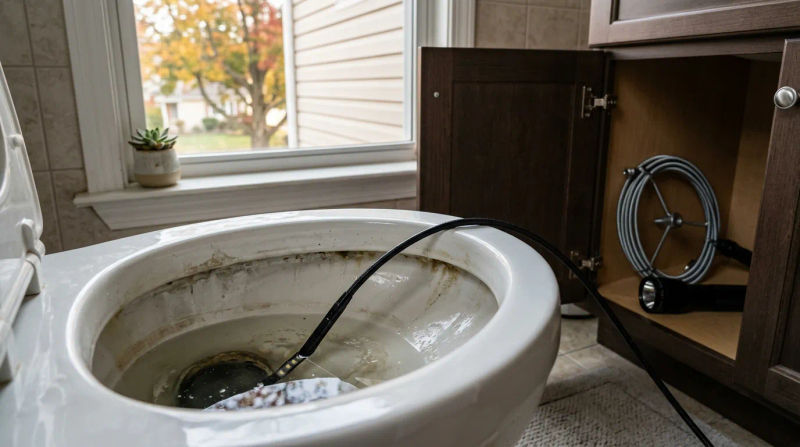
Professionals use long, powerful drain snakes to cut through tough blockages like tree roots far down the line. More importantly, for recurring issues, a professional can perform a sewer camera inspection to see exactly what’s happening inside your pipes. This eliminates guesswork and allows for a permanent solution, whether it's hydro-jetting to clean the pipe walls or a targeted pipe repair.
Conclusion
That constantly clogging toilet is more than just an inconvenience; it's your plumbing system's way of telling you something is wrong. While the immediate cause might be a simple obstruction, recurring clogs almost always point to a deeper problem like aging pipes, tree roots, or a blockage forming deep within your main drain line. This is especially true as the fall season brings heavier household use and environmental pressures that expose these hidden issues.
Ignoring the warning signs can lead to a much more serious and messy sewage backup. By understanding the potential causes and knowing when the problem is beyond a DIY fix, you can address the issue effectively.
If you notice any of these signs, don't wait for a full-blown emergency. Contact a local, qualified professional for an inspection to diagnose the root cause and restore your peace of mind.